


Luminary 2 – Performance Marketing Creative System
Intro
At Luminary 2, I worked as a Graphic Designer focused on performance-driven marketing for automotive brands. I created scalable digital advertising systems, campaign branding, and multi-channel creative assets designed to support dealership sales across paid social, display, email, and web platforms.
Clients included Hyundai, Volkswagen, Nissan, and Ford.
Context
Luminary 2 was a digital marketing startup specializing in high-volume automotive advertising for dealership groups. The creative team supported fast-moving promotional cycles where campaign performance directly impacted dealership traffic and sales.
Design output needed to function across multiple platforms including Google Display Ads, Facebook/Instagram ads, email campaigns, and supporting web assets, all while maintaining strict brand compliance for each automotive manufacturer.
Problem
The primary challenge was producing large volumes of high-performing creative assets while maintaining consistency, speed, and brand accuracy across multiple clients and platforms.
Each campaign required:
Multiple ad sizes and variations per platform
Rapid iteration cycles based on performance data
Strict adherence to multiple brand guidelines simultaneously
Coordination across marketing, development, and external vendors
Fast turnaround aligned with dealership promotional timelines

Key Challenges
Cross-functional execution
Work needed to align with developers (web assets), marketers (campaign strategy), and external vendors (trade show production).
Tight turnaround cycles
Campaigns were time-sensitive and often tied directly to dealership promotions and sales events.
High-volume production at scale
Campaigns required hundreds of creative variations across formats, placements, and messaging.
Multi-brand complexity
Each automotive client (Hyundai, Ford, Nissan, Volkswagen) had distinct brand systems that had to be followed precisely.
Performance-driven iteration
Ads were continuously optimized based on engagement and conversion performance
across paid media channels.
Responsibilities
Produced web assets such as icons and vector illustrations in collaboration with development teams
Designed trade show and large-format promotional materials in coordination with vendors and clients
Supported social media content strategy to increase engagement and campaign reach
Ensured brand compliance across multiple automotive manufacturers and campaign systems
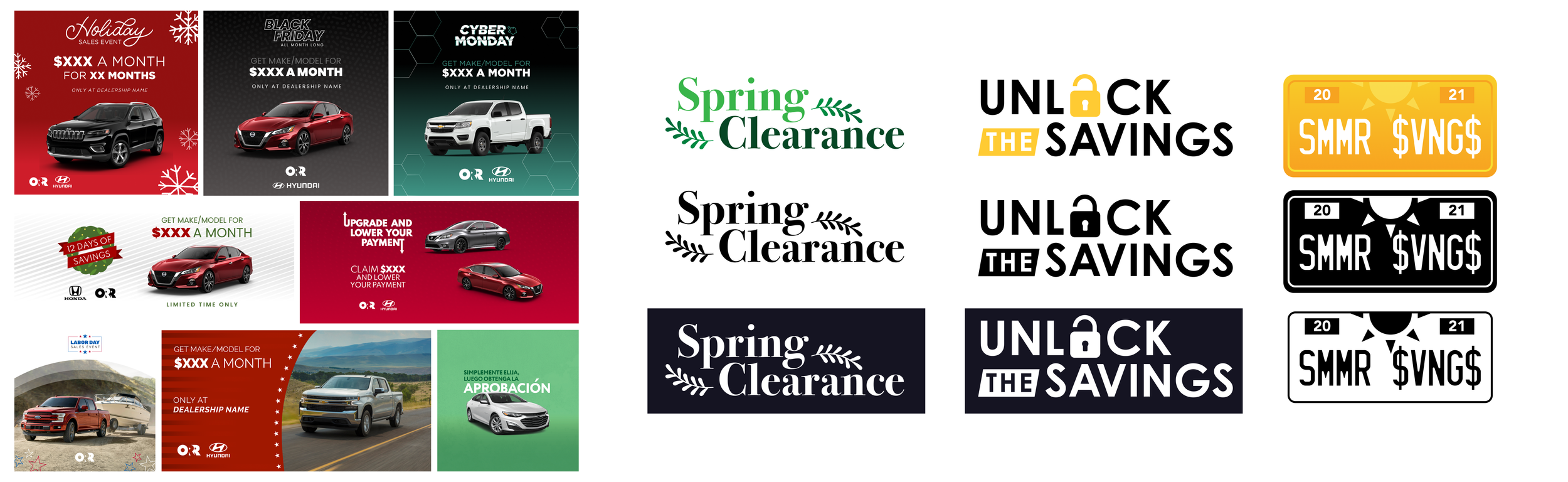
Designed 500+ digital ads for Google Display, Facebook, Instagram, and email campaigns
Created campaign and event logos for dealership promotions and marketing initiatives
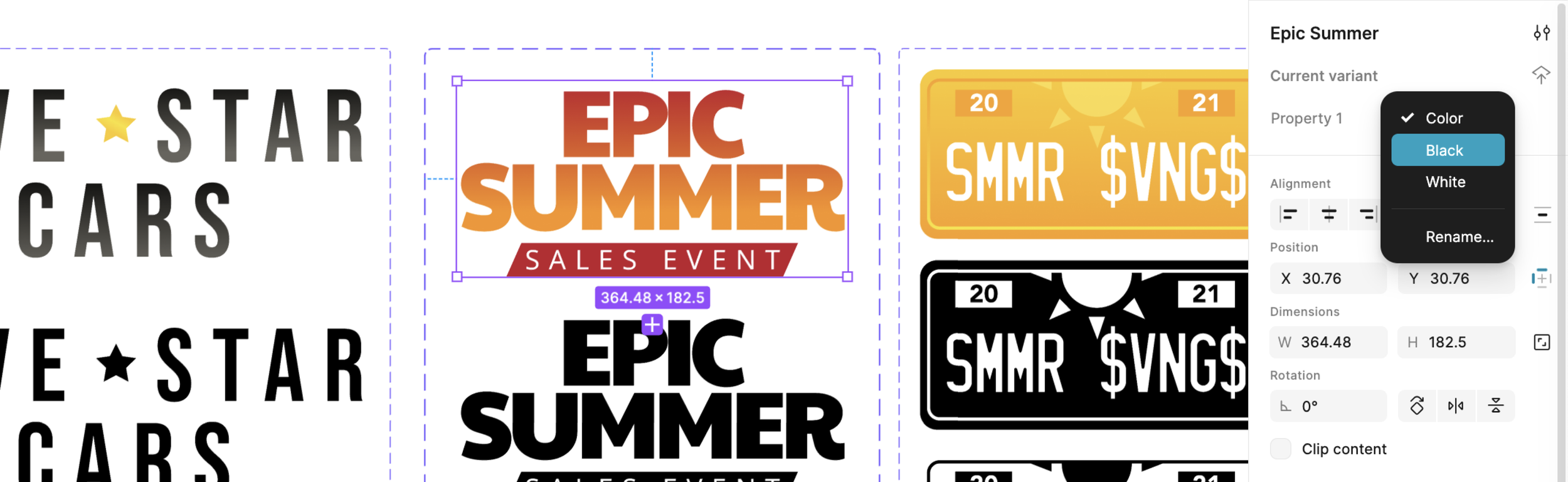
Built modular Figma component libraries for scalable ad production across multiple campaigns
Developed standardized asset systems including black, white, and color logo variations
Solution
To manage scale and consistency, I developed a structured design system in Figma that enabled rapid production of campaign assets while maintaining brand integrity.
Cross-Team Collaboration
Worked with developers on implementation of web assets and UI elements
Coordinated with vendors for print and trade show execution
Partnered with marketing teams on social content strategy and campaign rollout
Campaign Branding System
Designed event and promotional logos for dealership campaigns
Developed multi-variant logo systems (color, black, white versions)
Organized all branding assets into a centralized Figma library
Performance-Oriented Design
Iterated ad creatives based on engagement and performance feedback
Adjusted layouts and messaging for different funnel stages
(awareness to conversion)
Scalable Creative System
Built reusable ad templates for multiple formats and platforms
Structured layout systems for copy, imagery, and CTA placement
Created flexible component-based designs for rapid iteration
Impact
Enabled high-volume production of consistent, multi-platform advertising assets
Improved efficiency in campaign design workflows through reusable systems
Strengthened brand consistency across multiple automotive clients
Supported performance marketing campaigns that contributed to dealership traffic and conversions
Reduced production friction through standardized Figma component libraries
Improved cross-team alignment between design, marketing, and development workflows
Reflection
Working in a performance-driven marketing environment taught me how to balance speed, consistency, and brand integrity. It also reinforced the importance of system thinking, where the most valuable output is not just individual designs, but the frameworks that enable teams to produce high-quality work efficiently!